The Supply Gap That Created This Moment
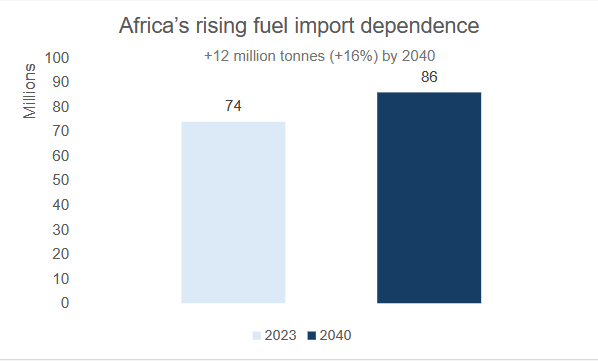
Africa imports more than 70 percent of its refined petroleum, at a cost the continent cannot indefinitely sustain. The Africa Finance Corporation projects a continental fuel shortfall of 86 million tonnes by 2040 — the equivalent of nearly three Dangote-scale refineries — and no credible pipeline of refining capacity currently exists to close that gap. East Africa is among the most exposed sub-regions: fuel import dependency runs at close to 100 percent, with the $11.8 billion annual import bill representing one of the single largest sources of foreign exchange outflow across the region.
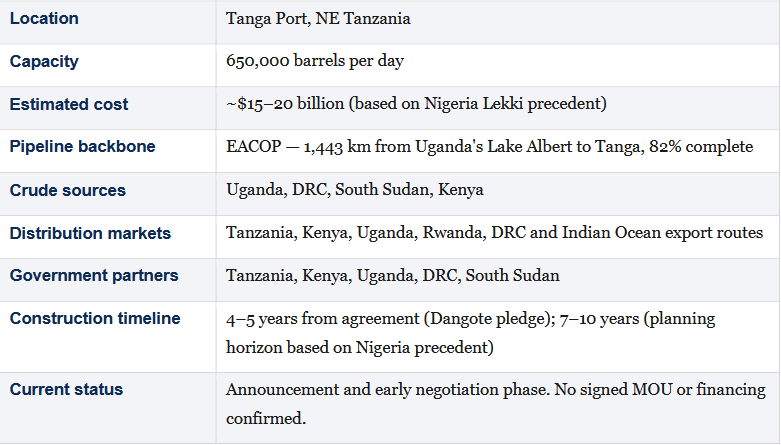
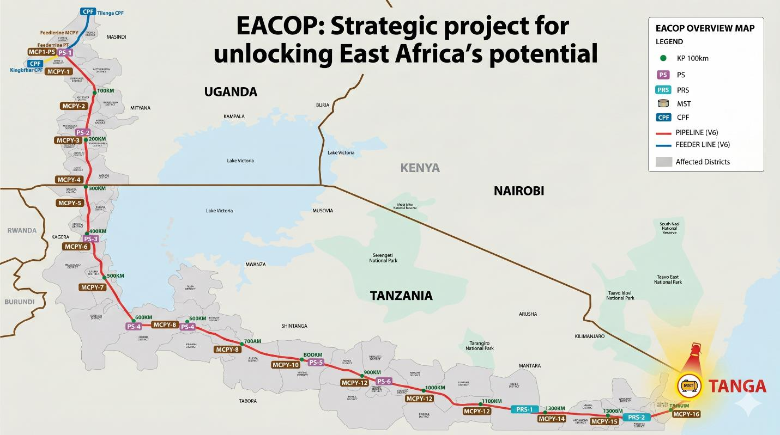
The 2026 Strait of Hormuz disruption sharpened that exposure into a policy emergency. With supply routes tightened and fuel costs spiking across the region, governments that had treated refining capacity as a long-term ambition found themselves under immediate pressure to act. The timing of Aliko Dangote’s announcement at the AFC’s Africa We Build Summit in Nairobi in April 2026 — a 650,000 barrel per day refinery at Tanga Port in Tanzania — was not coincidental.
Supply-side urgency and political will are rarely present simultaneously; for Tanga, they are.