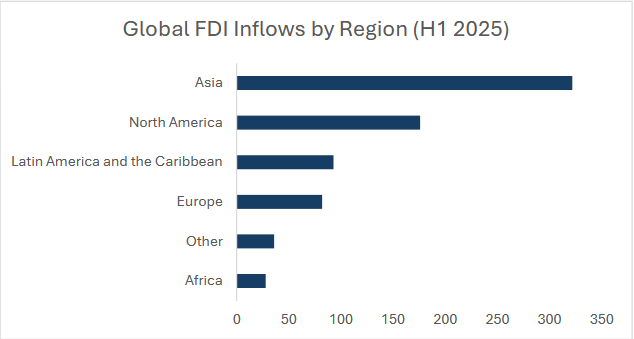
Africa is not the first region to shift from external dependence to internal capital formation. East Asia did this through the “Flying Geese” model, led by Japan from the 1960s, where rising wages and industrial upgrading pushed firms to relocate factories and production lines to lower-cost economies such as South Korea, Taiwan, and later Southeast. Asia and China. These relocations transferred not just production, but also jobs, technology, supplier networks, and industrial skills, enabling recipient countries to build their own manufacturing capacity, upgrade into higher-value industries, and in turn relocate lower-value activities further down the chain over time.
Europe followed a more institution-driven version. From the 1990s, Germany and Western Europe invested heavily in Central and Eastern Europe, integrating countries like Poland, Hungary, and the Czech Republic into manufacturing value chains. EU accession and cohesion funds accelerated convergence by strengthening infrastructure, institutions, and labour capacity.
Africa is beginning to show early signs of a similar pattern. South Africa and Morocco are emerging as regional investment hubs, expanding capital and supply chain linkages into neighbouring economies. However, this progress remains constrained by weak integration architecture, including limited capital mobility, fragmented regulations, and weak cross-border enforcement.
The AfCFTA is designed to address these gaps by creating a more unified market. Whether it can do so quickly and effectively enough to shift the continent’s investment trajectory remains one of Africa’s defining policy questions.