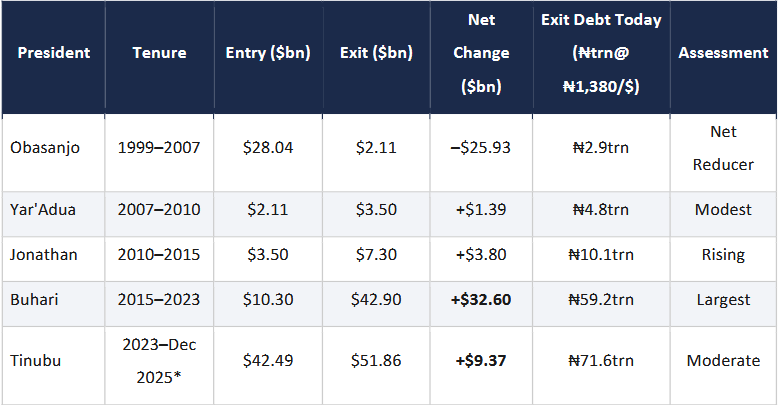
External debt obligations are contracted and repaid in foreign currency. As such, dollar-denominated measurements provide the most consistent basis for comparison across administrations.
Following exchange-rate unification in June 2023, the naira depreciated significantly against the US dollar. This had a substantial accounting effect on the domestic valuation of Nigeria’s external debt stock. The approximately $42.5 billion inherited by the current administration was valued at around ₦19.6 trillion under the previous exchange-rate regime. After revaluation at market exchange rates, the same stock appeared substantially larger in naira terms.
This increase did not arise because the government borrowed tens of trillions of naira in new external obligations. Rather, it reflected the translation effect of applying a weaker exchange rate to an existing stock of foreign-currency debt. Comparing debt figures expressed in nairabefore and after exchange-rate adjustment, without controlling for these valuation effects, creates a misleading impression of debt accumulation.
Figure 2: Presidential Debt Ledger showing start, end, net change, and all debts in Current Naira values.