Commodity Price Performance (Energy, Metals, Agriculture)
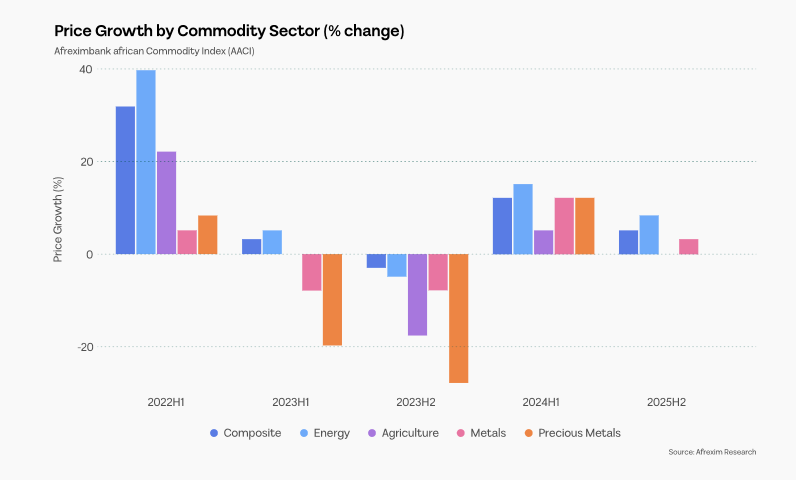
Global commodity markets have become increasingly fragmented, with energy, metals, and agriculture following distinct price paths. Energy prices remain volatile, shaped by geopolitical tensions and supply chain disruptions. Metals markets are now split: traditional industrial metals like copper and aluminum, and transition minerals such as lithium and cobalt, which are critical for renewable energy and electric vehicles. Agricultural prices are driven largely by climate shocks and trade restrictions rather than conventional demand trends.
Africa’s exposure to these changes varies widely across countries and sectors. Oil exporters like Nigeria face different pressures than mineral exporters such as Zambia or agricultural economies like Kenya. This uneven exposure is widening performance gaps across the continent, with commodity price movements increasingly shaping both economic and currency outcomes.
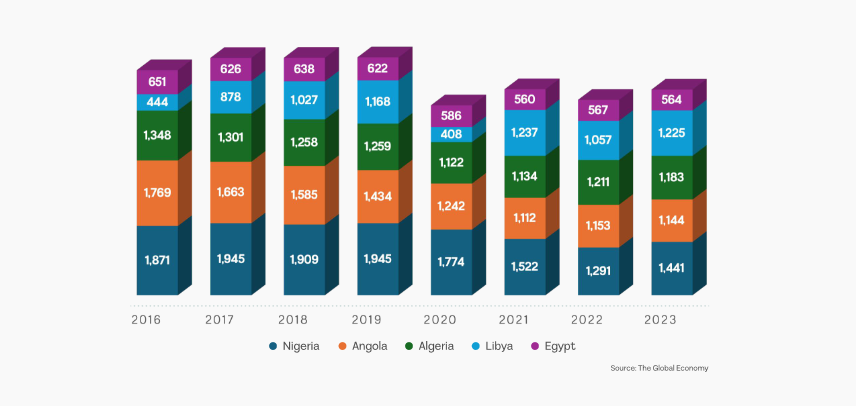
Energy production and consumption in African economies are significantly exposed to crude oil and gas markets, Africa contributed roughly 8% of global oil output in 2023. With major producers including Nigeria, Angola, Algeria, Libya, and Egypt. Nigeria leading production, although regional output has fluctuated due to investment and political instability.
Crude Oil Production (Thousands Of Barrels/day)
Global Crude Oil Price Per Barrel (USD)
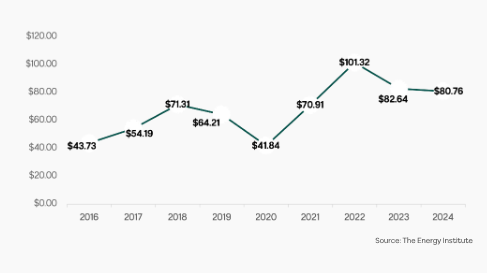
Crude price has seen a 84.68% increment from 2016 to 2024 reaching an impressive high of $101.32 in 2022. Refined petroleum is increasingly relevant across Africa, Nigeria for example is building downstream capacity (e.g., Dangote Refinery, 650,000 b/d) and has partnered with standard and poor (S&P Global) to create a regional fuel price benchmark for West Africa, reflecting a shift toward more domestically relevant pricing structures. Energy prices have seen mixed performance globally, with West Texas Intermediate crude oil (WTI) and natural gas exhibiting volatility amid demand uncertainty. Recent daily commodity indices show natural gas and oil moving modestly in late 2025.
Meanwhile Metals such as copper, gold, platinum-group metals (PGMs) and chrome have remained central to African export performance.
Global Price of Gold and Copper (USD)
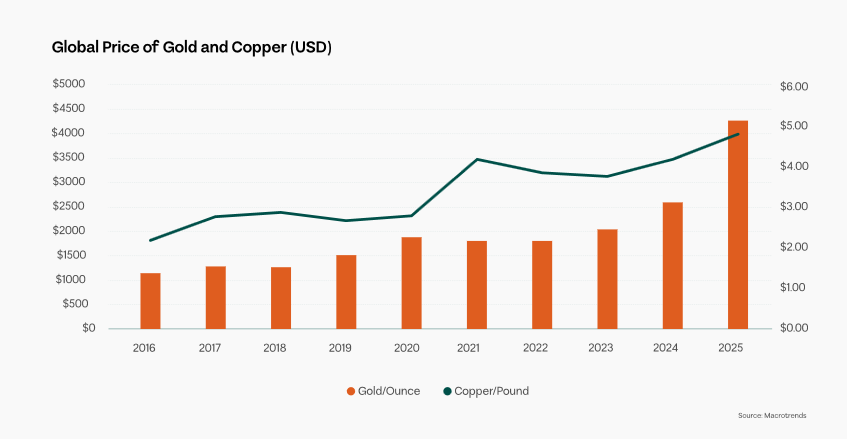
Gold and Copper prices have reached all-time highs, a 275% increment in Gold and 118% in Copper from 2016 to 2025 driven by industrial demand and expectations around the energy transition, which benefits producers like the Democratic Republic of Congo producing 10% of global output and Zambia. Gold and PGMs have benefited from safe-haven demand and continued supply deficits, supporting export revenues for South Africa, Ghana, Tanzania, and others. South Africa remains dominant in ferrochrome and PGMs, though domestic fiscal policy proposals (e.g., chrome export taxes) have raised concerns among producers.
African agriculture features key cash crops (e.g., cocoa, coffee, fruits, nuts, cotton), with Africa holding sizeable comparative advantages in several categories: Edible fruits & nuts 9.6% global share, Cocoa 19.7% of world exports, Coffee & spices 10.3% global share according to AgriFocus Africa. Cocoa prices have historically experienced significant swings, having surged dramatically in recent years and creating income volatility for producers in Côte d’Ivoire and Ghana.
Agriculture remains a large employer (often >50% of working population) and contributor to GDP in many African countries, though export value growth has lagged industrial and service sectors in some instances.
Crude Oil Production (Thousands Of Barrels/day)
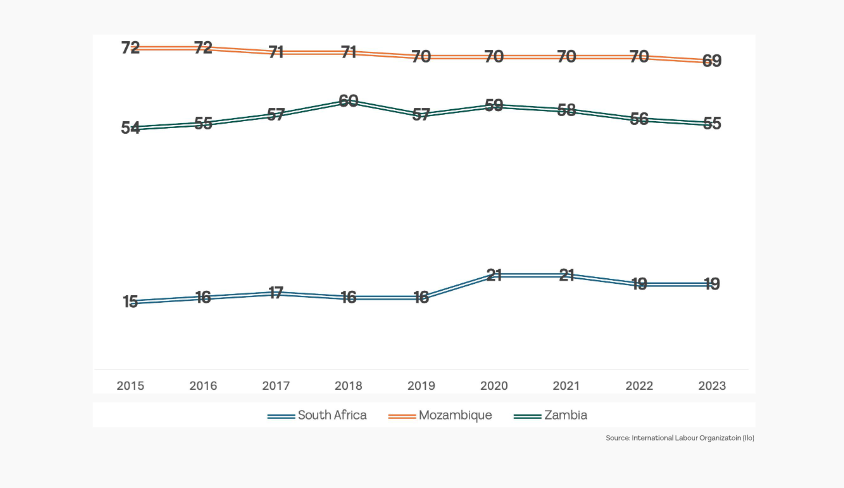
Agricultural % Of GDP In South Africa, Mozambique and Zambia
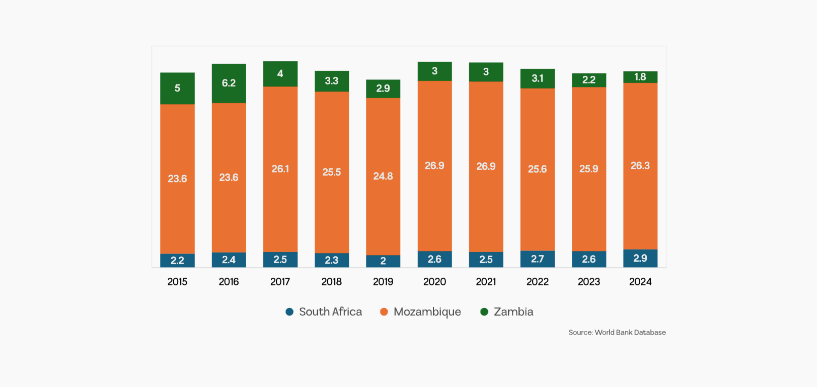
South Africa have the lowest percentage of labor force involved in agricultural activities and also have the lowest agricultural percentage of GDP, Mozambique have the highest in both share of GDP and participation while Zambia. The highlight the economic importance of agriculture in these countries.
Africa’s Share of Global Production
In Energy and Metals, Africa’s share of global commodity trade remains concentrated but reasonably modest. Metals & energy trade accounted for roughly 7.6% and 4.9% of global trade respectively in 2019 according to International Monetary Funds (IMF). Africa holds significant mineral reserves, Chromite 44% global share, Cobalt 57% global share, Gold 21%, Diamond 46%, Platinum & platinum-group metals dominated by South Africa 90%. Estimates suggest Africa contains 30% of the world’s critical mineral reserves, including key energy transition metals like lithium and cobalt, which are central to renewable technology supply chains.
In Agriculture, exports from sub-Saharan Africa constituted around 3.8% of global agricultural trade in 2019; this share varies significantly by commodity. Insights indicates that Africa’s high reserve shares contrast with lower global export shares, reflecting structural barriers such as processing capacity limits, infrastructure gaps, and incomplete value chains.
Export Concentration & Vulnerabilities
Africa’s export profiles remain heavily tilted toward commodities like oil, gold, copper, and cocoa still comprise over 70% of export earnings for the continent as a whole. The United Nation Conference on Trade and Development (UNCTAD) research indicates that many African economies export upwards of 60–80% of their goods in primary commodity form, exposing them to product concentration risk. Such concentration leaves economies sensitive to commodity price cycles, these low value chain investments has impacted trade balances, fiscal revenues, and FX flows across Africa.
Fiscal & FX Sensitivity
Governments reliant on commodity exports often see fiscal revenues and foreign exchange reserves tied to price instability. Oil price downturns can sharply reduce fiscal space in Nigeria, Angola, and other producers thereby affecting GDP.
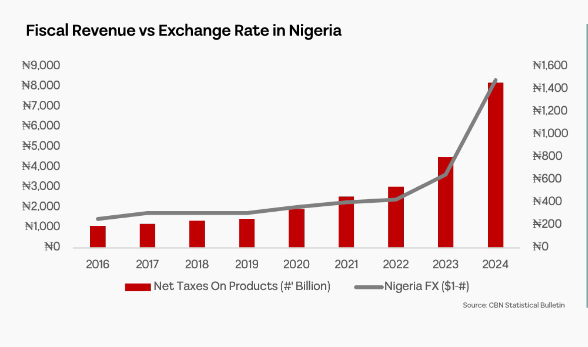
Nigeria for example has seen fiscal revenue and exchange rate head in the same direction highlighting the impact fiscal policies have on exchange rate and vice versa. It is also important to note that correlation isn’t equal to causation. The tax rate on good imported and exported into the country has an impact on the valuation of naira but is not necessarily the cause for the surge in exchange rate overtime. Precious metals like gold and copper can provide resilience during global economic stress, maintaining FX reserves for exporters.
Investment Vehicles
While specific instruments vary by market, key avenues include Exchange-listed mining and energy firms on the JSE, NGX, LSE, and other exchanges. Also tracking global metals and energy prices provide indirect exposure to African export dynamics (e.g., broader copper or gold ETFs)
Private equity and project finance historically played a large role in mining and Agri-commodity investment but have declined, slowing infrastructure development and diversification efforts.
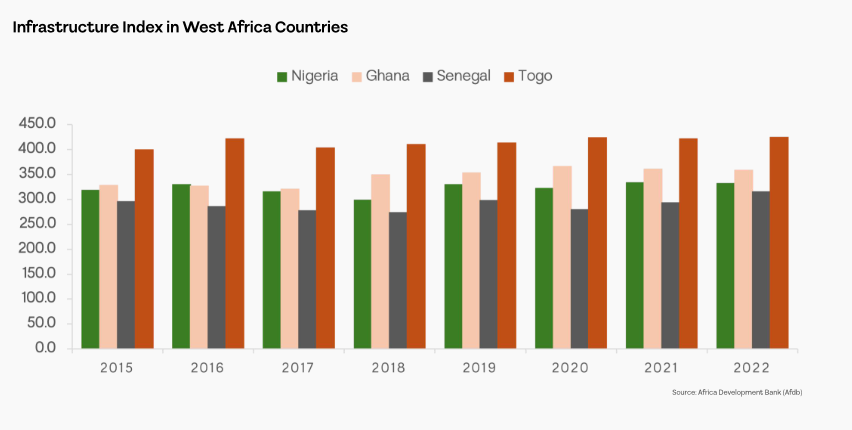
AFDB measure infrastructure progress in the countries by covering sectors such as energy, transport, ICT, water and sanitation. The chart above shows the slow progress of infrastructure in Nigeria, Ghana, Senegal and Togo. An increment of 4.22% in Nigeria, 9.1% in Ghana, 6.5% in Senegal and 6.2% in Togo from 2015 to 2022 respectively shows a slow investment by the Government. World bank suggests 8% of GDP should be invested in infrastructure to cover the infrastructure decay in Africa. Infrastructure vehicles such as public-private partnerships in transport and logistics are critical to reducing export bottlenecks.
Comparative Lens: Exposure Across Commodity Categories
Energy vs Minerals vs Agriculture
Energy (crude oil/oil) remains prone to geopolitical and cycle risks. While minerals are increasingly tied to long-term industrial demand (e.g., EVs, renewables) and may sustain structural growth. Agriculture on the other hand plays a fundamental role but is vulnerable to weather, disease, and global commodity cycles.
Transition Minerals & Long-Term Demand Trends
Africa’s role in the global energy transition is rising because of its strategic position in critical minerals like Cobalt, lithium, and copper are vital for electric vehicles, batteries, and renewable energy technologies and Africa holds material shares of global reserves. The drive to secure supply chains for clean energy has already attracted foreign investment in mining capacity and infrastructure.
In the long-term demand, global demand for minerals tied to the energy transition and is projected to grow sharply, potentially reshaping Africa’s export dynamics. Meanwhile continued infrastructure investment and value-addition (e.g., processing/refining) are key to enhancing Africa’s role beyond raw exports.
Conclusion: Opportunities and Risks
Africa’s resource wealth provides a foundation for export growth and global market integration, particularly in critical minerals and energy. Premium pricing for metals and strategic transition materials can expand fiscal space and investment capacity. Also, development of regional price benchmarks and downstream industries (e.g., refining) could enhance economic resilience and deepen markets.
The risks & structural challenges such as export concentration creates vulnerability to price fluctuations. Limited value addition and processing capacity mean Africa captures a small share of final value. While Infrastructure and financing gaps (e.g., declining project finance) constrain long-term growth.