African fixed income markets offer a wide range of opportunities and risks, shaped by differences in sovereign credit quality, currency stability, interest rate dynamics, and the depth of local corporate bond markets. In 2025, the continent saw divergent performance across countries, with yields reflecting local macroeconomic conditions, external financing pressures, and investor sentiment.
Sovereign Bond Yields and Yield Curves: Signals of Risk and Opportunity
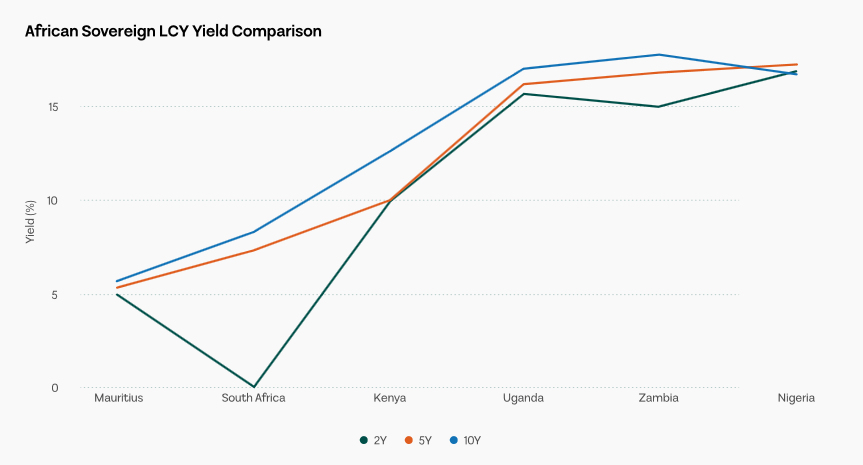
Sovereign yields remain the benchmark for African fixed income. Low-debt economies like Botswana and Mauritius offer moderate yields and high investor confidence, while higher-yielding markets such as Ghana and Zambia reflect elevated risk from debt pressures. South Africa’s moderate slope reflects stable inflation, whereas Nigeria’s steep curve points to fiscal and currency concerns. Investors use these curves to gauge risk and potential capital gains.
Credit Ratings and Spreads: Gauging Default Risk
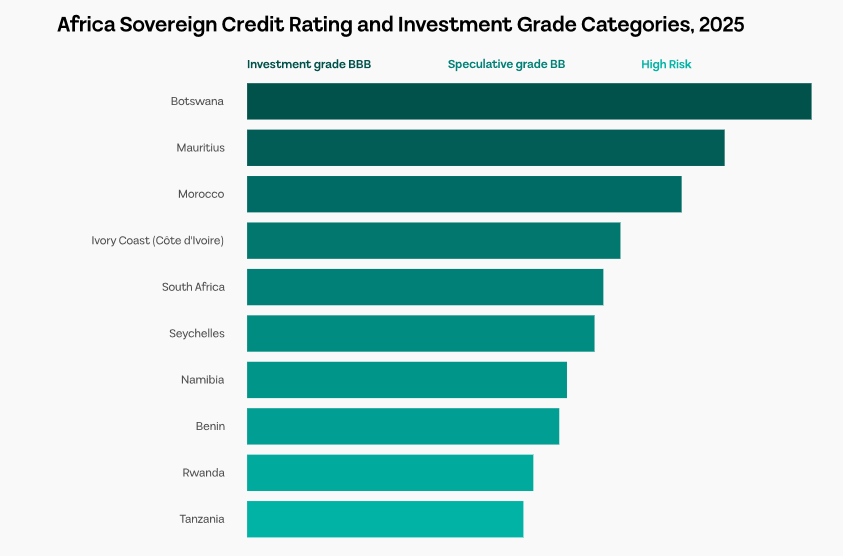
Credit ratings are key to assessing sovereign risk in African bond markets, and they directly affect bond yields and investor confidence. Investment-grade issuers like Mauritius (AA-) and Botswana (A-) trade close to U.S. Treasuries, hence their bonds are low-risk and offer returns similar to the safest global benchmark. These countries’ strong fiscal management and stable economies make the chance of default very low, so investors require only a small extra yield, called a spread, over U.S. Treasuries.
Most African countries, however, remain speculative grade, such as Ghana (B/B2) and Zambia (B+/B1), with wider spreads reflecting higher debt, commodity dependence, political risks, and economic volatility. Wider spreads can attract yield-seeking investors, but they come with higher risk and require careful analysis.
Local vs Hard-Currency Bond Performance: The Currency Factor
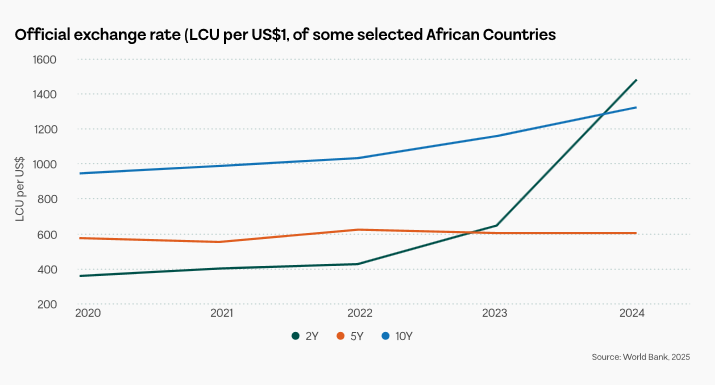
In 2025, African fixed income highlighted the impact of currency exposure. Local-currency bonds, such as South African rand or Nigerian naira debt, offered higher yields but faced depreciation risk, while USD-denominated bonds reduced currency risk but remained sensitive to global interest rates. Zambian kwacha bonds benefited from domestic stabilization, boosting foreign returns, whereas Nigerian naira gains were offset by currency weakness.
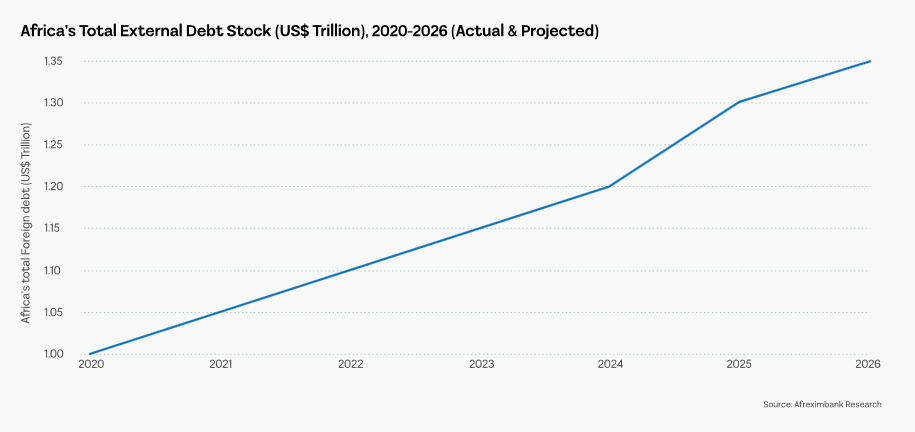
African sovereign debt blends local and foreign issuance, bilateral loans, and concessional financing. Local bonds can deliver higher returns with volatility, while hard-currency bonds provide stability but track global conditions. Navigating these trade-offs is central to resilient African fixed-income strategies.
Debt Sustainability Indicators: Measuring Long-Term Credibility
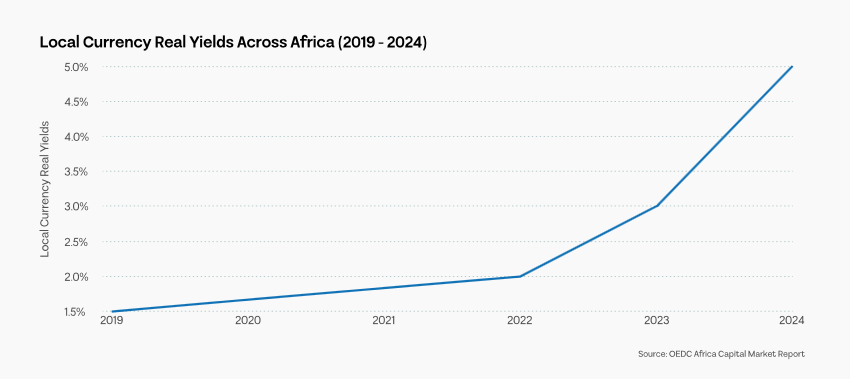
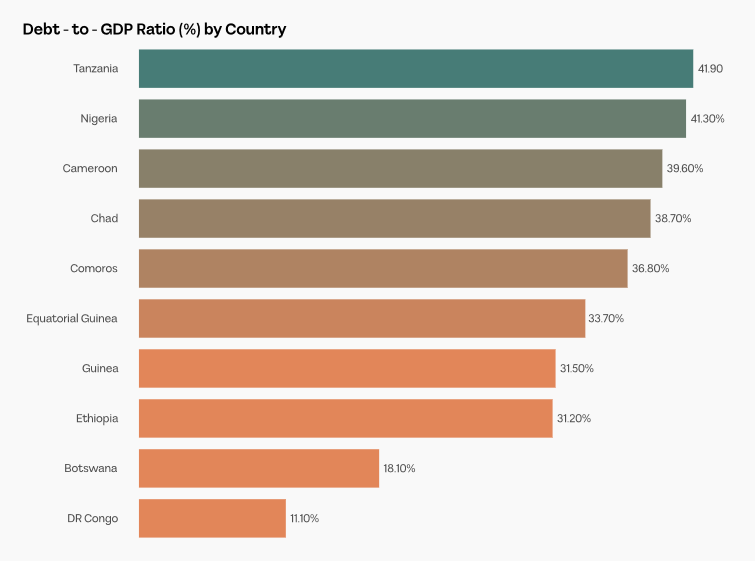
Debt sustainability is key to investor confidence. Metrics such as debt-to-GDP, debt service-to-revenue, and external debt-to-exports indicate a country’s long-term repayment capacity. Nations with conservative fiscal profiles, like Botswana and Mauritius, maintain stable debt and low default risk, supporting steady yields. In contrast, Ghana and Zambia, after debt restructurings, show higher but improving metrics.
These indicators help investors balance potential returns against the risk of restructuring or currency pressures.
Corporate Bond Market Depth: Emerging Opportunities
Africa’s corporate bond markets remain small and concentrated, with meaningful issuance mainly in South Africa, Nigeria, Kenya, and select Francophone countries. Large corporates in financial services, telecoms, infrastructure, and energy dominate issuance. South Africa hosts the continent’s most developed corporate bond market, offering a wider range of maturities and credit quality, while Nigeria has seen growing issuance and foreign participation, particularly in higher-yield bank and telecom bonds. Kenya’s market remains selective, with bonds mainly used to finance infrastructure and expansion projects.
Despite Africa’s rising need for long-term financing, corporate bonds play a limited role in corporate funding. Key constraints include weak regulatory and market infrastructure, a limited domestic institutional investor base, and governance challenges.
While African corporate bonds can offer yield and diversification opportunities, limited liquidity and uneven credit quality mean they are best suited to investors with strong credit discipline and longer investment horizons.
Comparative Sovereign Market Performance
In 2025, Ghana and Zambia emerged as high-yield performers, benefiting from successful debt restructuring and improving fiscal credibility, which produced some of the highest local currency returns for sovereign bonds in Africa. In contrast, fiscally conservative countries like Mauritius, Botswana, and South Africa offered steady performance, characterized by narrow spreads and low default risk. Performance also diverged along currency lines: hard-currency bonds outperformed local currency debt in countries experiencing domestic currency appreciation, while currency depreciation in Nigeria limited USD returns despite nominal local gains.
Risk Considerations for Fixed Income Investors
Investors in African fixed income markets face multiple risk factors. Currency risk is particularly relevant for local currency bonds in markets such as Nigeria and Ghana, where depreciation can offset nominal gains. Liquidity risk is notable in corporate bonds, which are often shallow and illiquid, requiring careful position sizing and longer investment horizons. Credit and sovereign risk remain key considerations, particularly for countries with restructuring history, high fiscal deficits, or heavy reliance on commodity exports. Additionally, global factors such as U.S. interest rate changes, commodity price volatility, and external financing needs can influence yields and spreads across the continent.
Summary: Investment Implications
African fixed income markets in 2025 offered a diverse spectrum of risk and return. High-yield opportunities were available in restructured economies like Ghana and Zambia, while fiscally conservative countries such as Mauritius, Botswana, and South Africa provided more stable but lower-yielding instruments. Emerging corporate bond markets offered potential for yield enhancement, though they required long-term commitment and careful credit selection. Currency management was critical for international investors, with hard-currency bonds providing protection against local depreciation.
Overall, the African fixed income landscape is maturing beyond sovereign-only markets, with expanding corporate issuance, improved fiscal transparency, and growing investor sophistication. These developments set the stage for portfolio diversification, yield enhancement, and cross-market risk management in 2026 and beyond.