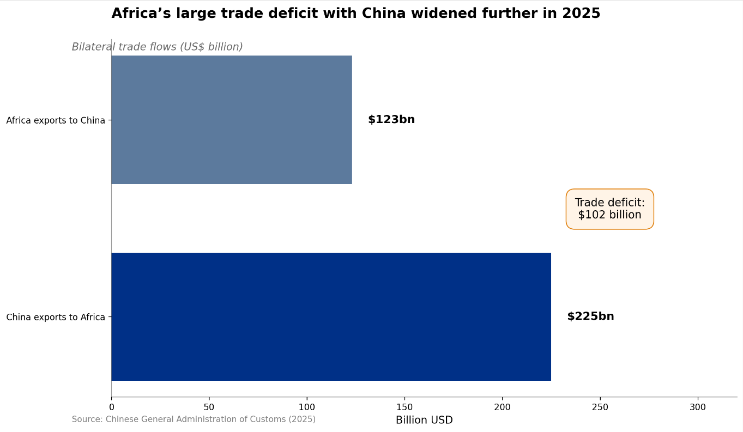
Four constraints will shape whether this policy drives real transformation or just higher trade volumes.
First, the deficit is widening. Chinese exports to Africa grew over 25% in 2025, faster than Africa’s exports into China. Without local processing capacity, zero-tariff access mainly accelerates raw material flows rather than rebalancing trade.
Second, readiness is uneven. South Africa, Morocco, Egypt, and Kenya have the industrial base and logistics to
capture near-term gains. Many frontier markets remain constrained by weak ports, limited cold chains, and
underdeveloped food safety systems. Tariff removal alone does not close that gap.
Third, non-tariff barriers such as rules of origin certification, product standards alignment, and regulatory
requirements remain significant hurdles. Finally, currency and dependency risks are rising. Yuan settlement,
reliance on Chinese capital, and persistent trade deficits offer liquidity but create dependency over time.